
Higgsfield has become much more than an AI video generator. It combines models like Seedance, Kling and Veo with cinematic controls, characters, creative apps, editing tools and marketing workflows. That makes replacing it with a single tool harder than it sounds. Higgsfield currently describes its platform as an all-in-one video editor with 15+ major models and 70+ cinematic presets.
But there are good alternatives.
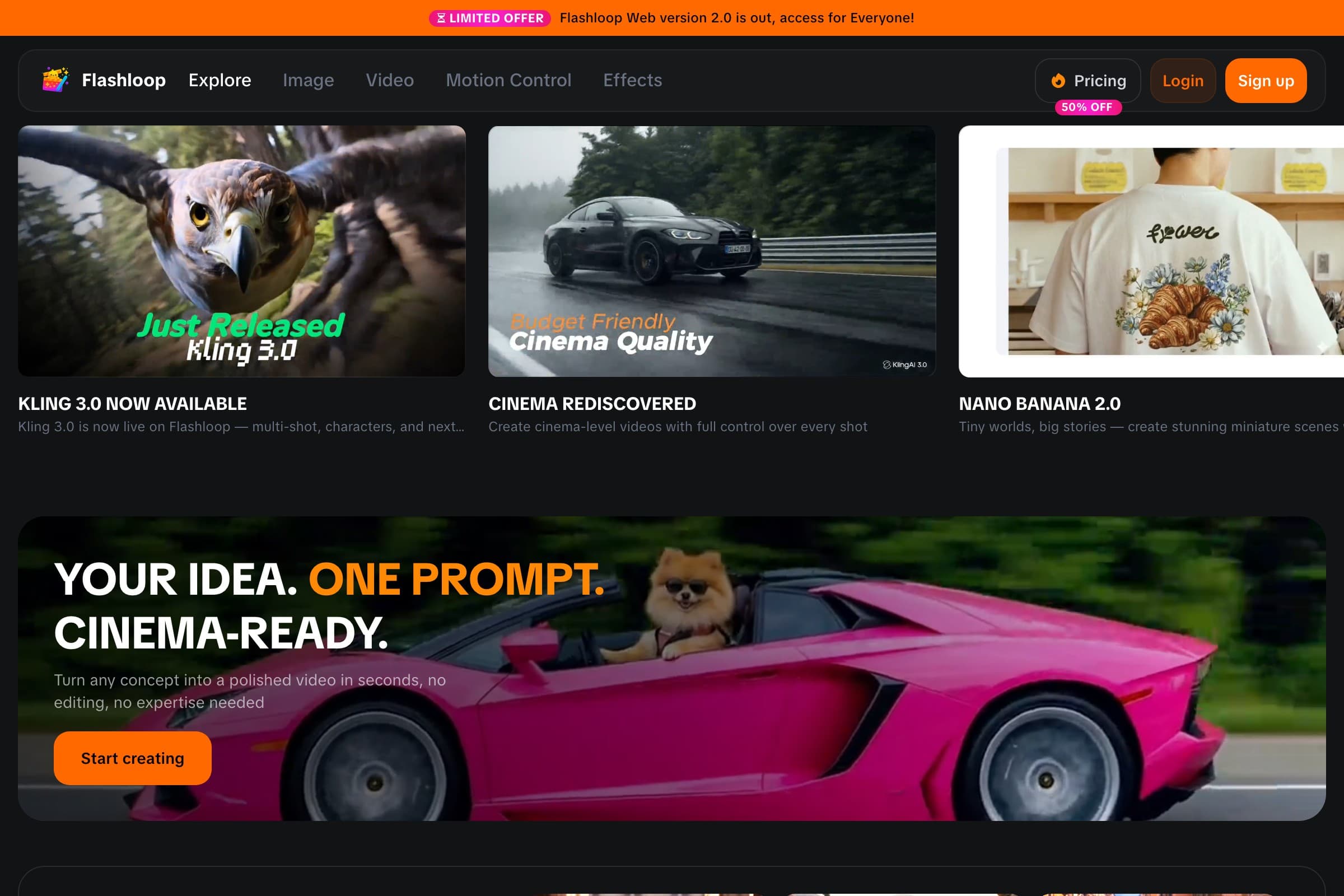
If what you want is one place to access the newest video and image models while creating social content quickly, Flashloop is the closest overall Higgsfield alternative.
If you care more about node-based creative workflows, Krea is stronger. If you're building professional films, Runway makes more sense. If you mainly want Seedance, Dreamina deserves a look.
Here's the short version.
| Higgsfield alternative | Best for | Why I'd choose it |
|---|---|---|
| Flashloop | Best for: Best overall Higgsfield alternative | Why I'd choose it: Major AI models + characters + one-click trend workflows |
| Krea | Best for: Visual experimentation and workflows | Why I'd choose it: Excellent model comparison, Nodes and creative tooling |
| Magnific / Freepik | Best for: Designers and creative teams | Why I'd choose it: AI generation plus stock, design, audio and editing |
| Runway | Best for: Professional video production | Why I'd choose it: Strong filmmaking tools and its own video models |
| OpenArt | Best for: Image-first creative workflows | Why I'd choose it: Broad image, video, audio and 3D model access |
| Dreamina | Best for: Seedance users | Why I'd choose it: Strong option if ByteDance models are your main reason for using Higgsfield |
| Kling AI | Best for: Kling users | Why I'd choose it: Go directly to the Kling ecosystem instead of using a multi-model platform |
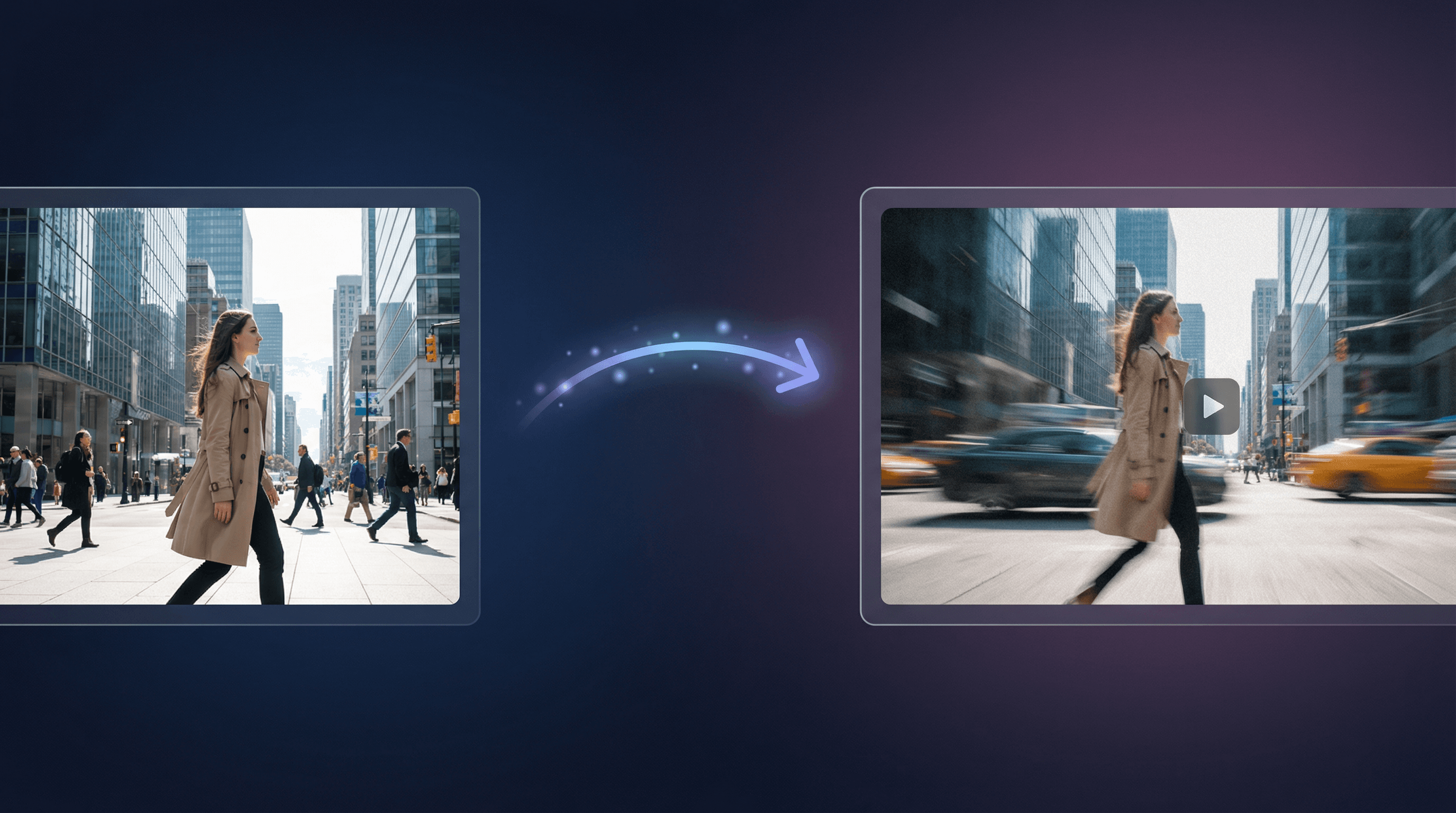
We ran the same prompt through three AI video models
One reason we built Flashloop around multiple models is that there isn't one AI video model that wins every generation.
To show the difference, we uploaded the same image and sent the same prompt to Seedance 2.5, Kling 3.0 and Veo 3 inside Flashloop. We didn't optimize the prompt separately for each model.

Here are the actual results.
Why look for an alternative to Higgsfield?
First: Higgsfield is a good product.
If you love its cinematic presets, camera controls and growing set of marketing tools, there may be no reason to switch. It supports major models including Kling 3.0, Veo 3.1 and Seedance 2.5, alongside its own creative workflows. Seedance 2.5 on Higgsfield, for example, supports clips up to 30 seconds with native audio and large multimodal reference sets.
The reason to consider Higgsfield alternatives is that not everyone needs the same parts of the product.
Some creators primarily want access to the newest AI models without jumping between five subscriptions. Others care about making TikToks, Reels and Shorts as quickly as possible. Some want a professional filmmaking environment. Others use Higgsfield almost entirely because a specific model such as Seedance or Kling happens to be available there.
Those users don't necessarily need another copy of Higgsfield. They need a tool that is better at their specific workflow.
Looking for a Higgsfield alternative because of credits?
Cost is one of the biggest reasons to compare AI video platforms, but comparing monthly subscription prices alone can be misleading.
AI video models can consume very different numbers of credits depending on the model, resolution, duration and generation settings. If you need several attempts before getting a usable result, the effective cost of one finished video can be substantially higher than the advertised cost of one generation.
That's why we recommend comparing cost per usable output, not only credits per month.
Also check what happens when you switch models. If your workflow uses Seedance for one project, Kling for another and Veo for another, the economics of a multi-model platform can be very different from paying for each model separately.
Higgsfield's pricing and credit costs can change, so check its current pricing page before making a decision.
How we evaluated these Higgsfield alternatives
We build Flashloop, so we want to be transparent about how this comparison was created.
We use and test Flashloop directly every day, including the AI video models available inside it. That currently means models across Google, ByteDance, Kuaishou, OpenAI, MiniMax, Alibaba and xAI, including Seedance 2.5, Seedance 2.0, Kling 3.0, Veo 3, Wan 3.0 and Grok Imagine.
For the other platforms in this guide, we evaluated their current public product information, model availability, documentation and pricing rather than claiming hands-on testing we haven't done.
Rather than counting how many features each marketing page lists, we compared five things: the AI models available, creative controls, the workflow around generation, pricing, and what each product does noticeably better than Higgsfield.
AI products change quickly, so features and pricing in this article were checked in September 2026.
Our goal isn't to pretend every tool is the same. It's to help you understand which Higgsfield alternative makes the most sense depending on why you're looking to switch.
1. Flashloop: best overall Higgsfield alternative
Best for: Creators who want multiple top AI models plus fast social and trend workflows.
Biggest advantage over Higgsfield: Instead of stopping at model access, Flashloop is built around turning those models into repeatable creator workflows.
Biggest limitation: If your main priority is a traditional professional filmmaking/editor environment, Runway is a better fit.
Higgsfield and Flashloop overlap in an important way: both let you access many of the best AI generation models without managing a separate account for every model provider.
Flashloop currently includes video models such as Seedance 2.5, Seedance 2.0, Kling 3.0, Kling 3.0 Turbo, Wan 3.0, MiniMax H3 Max, Veo 3, Gemini Omni and Grok Imagine alongside image models such as Nano Banana Pro, GPT Image 2.5 and Seedream 5.0 Lite. They are available through the same Flashloop ecosystem across web, iOS and Android.
One subscription, multiple AI video models
Instead of signing up for a separate platform every time a new video model becomes competitive, Flashloop puts them into the same workflow.

Where Flashloop becomes different is what happens around those models.
Why Flashloop is a strong Higgsfield alternative
Generating a video from a prompt is only one part of the job.
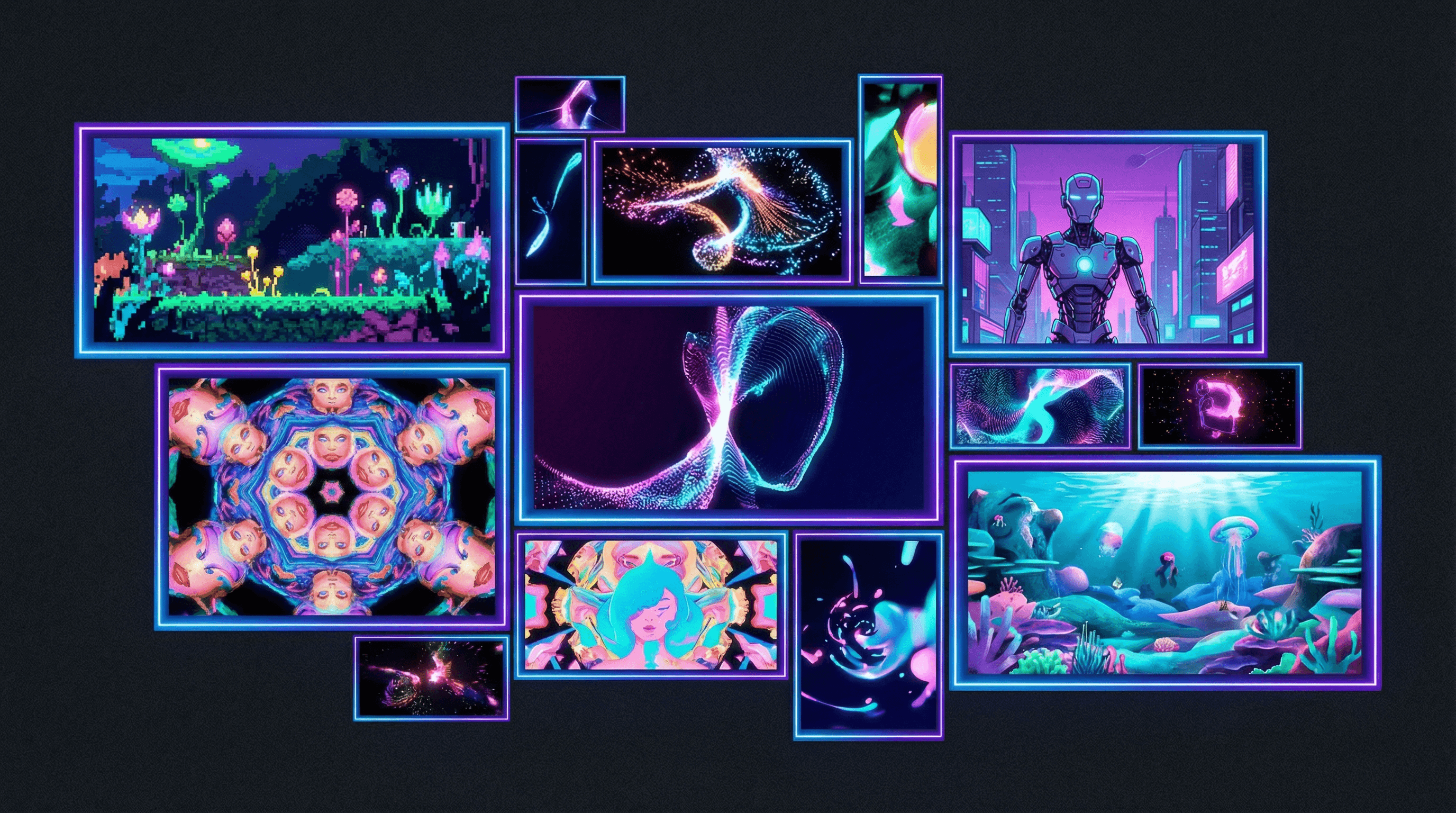
Flashloop also has a Character Builder for reusable characters and an Apps library built around repeatable formats and internet trends. Current Apps include Sports Anime, Claymation, Old Cartoon Style, Viral Skeleton, Glass ASMR, Bob & Wendy and other one-click workflows. Instead of figuring out the prompt structure for a format from scratch, you can start from a working workflow and customize it.

There are also Motion Control and Recast workflows on higher plans, and Flashloop can be connected to AI assistants through MCP. That means you can ask tools such as ChatGPT, Claude or Cursor to generate with models including Veo, Kling, Seedance and Wan while the resulting assets still land in your Flashloop library.
That combination makes Flashloop especially useful if your workflow looks like this:
idea → character/reference → generate → test another model → recreate a trend → publish
rather than:
idea → cinematic production pipeline → detailed post-production
Flashloop vs Higgsfield
| Feature | Flashloop | Higgsfield |
|---|---|---|
| Multiple leading video models | Yes | Yes |
| Mobile app (iOS + Android) | Yes | No |
| Seedance | Yes | Yes |
| Kling | Yes | Yes |
| Veo | Yes | Yes |
| Image generation | Yes | Yes |
| Reusable characters | Yes | Yes |
| One-click trend workflows | Strong focus | Available through Apps/ |
| Cinematic camera presets | More model/ | Strong focus |
| Marketing-specific studio | More creator focused | Strong focus |
| Motion control | Yes | Yes |
| Web creation | Yes | Yes |
| MCP / | Yes | Yes |
Where Flashloop is better
I'd pick Flashloop over Higgsfield when the goal is to move quickly between the newest models and turn them into social content.
It is particularly useful if you're constantly asking questions like:
- “Should I use Kling or Seedance for this?”
- “Can I make this viral format with my own character?”
- “Can I recreate this style without rebuilding the prompt every time?”
- “Can I generate the same project from my phone?”
The model is only one part of that workflow.
Where Higgsfield is better
Higgsfield has invested heavily in cinematic controls and its broader creative production ecosystem. Its own product describes more than 70 cinematic presets, and it has been expanding into marketing workflows and integrations around professional creative tools.
If those features are why you use Higgsfield, switching purely because another platform also carries Seedance or Kling doesn't make much sense.
My verdict
For creators searching for the closest overall Higgsfield alternative, I'd start with Flashloop.
There is enough overlap in model access that you won't have to give up the major generation engines, but the surrounding workflow is more focused on fast creation, reusable characters and internet-native formats.
If your work is closer to professional filmmaking than creator content, keep reading: the next few tools specialize differently.
2. Krea: best Higgsfield alternative for creative workflows
Best for: Creators who like experimenting, comparing models and building reusable visual workflows.
Biggest advantage: Excellent interface for moving between models and connecting generation steps.
Biggest limitation: It can become more tool-heavy than necessary if you only want a fast prompt-to-video experience.
Based on its current product offering, Krea is positioned particularly well for someone who likes the multi-model aspect of Higgsfield but wants a more open creative workspace.
Its current model library is enormous. On the video side alone, Krea lists Seedance 2.5, Veo 3.1, Kling 3.0, Sora 2, Runway Gen-4.5, Wan 3.0 and several MiniMax models.
One of the most useful ideas in Krea is simple: run the same prompt through multiple video models and compare the outputs in one place. That's genuinely useful because choosing the right model matters more than endlessly rewriting a prompt for the wrong one.
Krea also has Nodes for chaining models and creative steps together, which makes it more appealing for advanced repeatable workflows. Its Pro tier currently unlocks all video models plus workflow automation through Nodes and Apps.
My verdict
Choose Krea over Higgsfield if you enjoy building your visual workflow.
Choose Flashloop if you want more of that workflow already packaged around creator use cases and trends.
3. Magnific / Freepik: best for an entire creative stack
Best for: Designers, agencies and teams that need AI generation plus traditional creative assets.
Magnific's current offering, formerly associated with the broader Freepik ecosystem, goes well beyond AI video.
Its paid creative plans combine image, video and audio models with stock assets, editing tools, music, voice generation, upscaling, Spaces and API access. Its current model lineup includes technologies such as Seedance, Kling, Wan, Nano Banana and other leading generation models.
That's the key reason to choose it.
If your day involves creating an AI clip, finding a stock asset, upscaling an image, building a design and generating audio, keeping all of those tasks inside one subscription can be more valuable than having the most creator-specific AI video workflow.
The downside is the same thing: it's a huge creative suite.
If 90% of what you do is AI-generated short-form video, you may end up paying for and navigating a lot of functionality you don't need.
My verdict
Magnific/Freepik is one of the best Higgsfield alternatives for design teams.
For a solo creator mainly producing AI videos and social content, I'd put Flashloop or Krea ahead of it.
4. Runway: best alternative for professional filmmaking
Best for: Filmmakers, production teams and users who care more about directing shots than chasing the newest model every week.
On paper, Runway is the easiest recommendation on this list for a specific type of person.
If your mental model is “AI filmmaking software” rather than “AI content generator,” Runway makes sense.
Its Gen-4.5 model supports both text-to-video and image-to-video and is designed around detailed scene instructions, camera choreography and motion. Runway currently prices Gen-4.5 generation at 12 credits per second.
Runway's ecosystem is also much more deeply associated with film production and shot-level creative control than most multi-model aggregators.
But that doesn't automatically make it a better Higgsfield alternative for everyone.
If you're using Higgsfield because you like jumping between Seedance, Kling, Veo and other models, switching to Runway for its filmmaking workflow changes the way you work rather than simply replacing Higgsfield.
My verdict
Pick Runway if you're trying to direct a film.
Pick Flashloop if you're trying to produce a lot of creator content using whichever model works best.
They overlap, but they're solving different problems.
5. OpenArt: best for image-first creators
Best for: Creators whose workflow begins with images, characters and visual development before moving into video.
OpenArt has evolved into a broad creative suite spanning image, video, audio and 3D.
Its current model catalog includes Kling 3.0 and Kling Motion Control alongside newer image and multimodal models, with video generation integrated into the same creative environment.
Based on its current product offering, OpenArt makes the most sense if your typical project starts with concept art, character design or image generation and video is the next step.
That's slightly different from both Higgsfield's cinematic-video positioning and Flashloop's creator/trend positioning.
My verdict
OpenArt makes the shortlist because it gives visual creators a lot of room before they ever hit “generate video.”
For primarily video-first creators, I'd still look at Flashloop, Krea or Runway first.
6. Dreamina: best Higgsfield alternative for Seedance users
Best for: People whose main reason for paying for Higgsfield is access to ByteDance's Seedance models.
This is where choosing an alternative based on your actual use case really matters.
If you open Higgsfield almost every day, select Seedance and ignore most of the rest of the platform, you may not need another all-in-one creative suite at all.
Dreamina is part of ByteDance's broader creative ecosystem and puts Seedance front and center. Its current Seedance 2.5 material emphasizes the economics of generating specifically with that model and positions Dreamina as a lower-cost route for certain Seedance workflows. Because those comparisons come from Dreamina itself and depend heavily on plan, resolution and reference settings, I'd verify the live checkout price rather than assuming one platform is always cheaper.
That caveat matters.
AI video pricing is increasingly difficult to compare using only “$X per month.” One platform may include more credits but charge more per generation. Another might offer unlimited generations for selected models but slower queues or fair-use limits.
Compare the cost of the generation you actually make.
My verdict
If Seedance is basically your entire workflow, Dreamina deserves a serious look.
If you constantly move between Seedance, Kling, Veo, Wan and other models, a multi-model platform is more practical.
7. Kling AI: best if you only want Kling
Best for: Creators who know they want Kling and don't need a broad model aggregator.
This is the simplest option in the article.
Higgsfield and Flashloop both expose Kling alongside many other models. But if Kling itself is the product you care about, direct access to the Kling ecosystem can be the cleaner choice.
Kling 3.0 is particularly strong when you need multi-shot generation, native audio, subject consistency and controlled video from references. Higgsfield's own implementation highlights up to 15-second videos and structured multi-shot generation.
The tradeoff is obvious: choosing a model-specific platform means giving up the ability to switch engines whenever another model performs better for a particular shot.
My verdict
If you already know “I want Kling,” use Kling.
If your question is “Which model should I use?”, choose a platform that lets you answer that after seeing the results.
So, what is the best Higgsfield alternative?
For most AI creators, Flashloop is the best overall Higgsfield alternative because it preserves the biggest advantage of Higgsfield (access to many leading AI models) while putting more emphasis on creator workflows, reusable characters and ready-to-use social formats.
But I wouldn't recommend the same tool to everybody.
- Choose Flashloop if you want multiple leading models and fast creator workflows.
- Choose Krea if you want to experiment, compare models and build visual workflows.
- Choose Magnific/Freepik if AI generation is only one part of a much larger design workflow.
- Choose Runway if you're making professional cinematic work.
- Choose OpenArt if your workflow is image-first.
- Choose Dreamina if Seedance is really what you're paying for.
- Choose Kling AI if you only need Kling.
And if Higgsfield's camera presets, marketing tools and cinematic workflow are exactly what you love about it, the correct answer might simply be to stay with Higgsfield.
The best alternative isn't the platform with the longest feature list.
It's the one that removes the part of your current workflow that slows you down.
Frequently asked questions
What is the best Higgsfield alternative?
Flashloop is the closest overall alternative for creators who want access to multiple leading AI video and image models in one platform. It currently supports model families including Seedance, Kling, Veo, Wan, MiniMax and Grok alongside character and trend-based creation workflows.
Krea is another strong alternative if workflow automation and visual experimentation are more important to you.
Is Flashloop better than Higgsfield?
It depends on the workflow.
Flashloop is a better fit for creators who want to move quickly between AI models, reusable characters and trend-based content. Higgsfield is particularly strong in cinematic presets and its expanding production and marketing ecosystem.
Neither is automatically better for every creator.
What is the best free Higgsfield alternative?
If paying nothing is a requirement, Krea currently offers a free plan with daily compute units and limited access to image, video, 3D and lipsync models.
Free tiers and model access change frequently, so check the current limits before choosing a platform around them.
Which Higgsfield alternatives have Seedance?
Seedance is available on several multi-model platforms, including Flashloop and Krea, while Dreamina is a particularly relevant option for creators who want to stay close to ByteDance's ecosystem. Flashloop currently supports Seedance 2.5, Seedance 2.0, Seedance 2.0 Mini and Seedance 1.5 Pro.
Which Higgsfield alternative is best for AI video?
For general creator workflows, Flashloop is my pick.
For professional filmmaking, Runway is stronger.
For creative experimentation and node-based workflows, Krea is stronger.
The underlying model matters as much as the platform, which is why access to multiple models can be useful.
Which Higgsfield alternative is cheaper?
There isn't a universal answer.
AI platforms use different credit systems, model prices, unlimited plans, resolutions and generation lengths. Compare the cost of the specific model, duration and resolution you regularly use rather than comparing subscription prices alone.
Does Flashloop have the same AI models as Higgsfield?
There is significant overlap, including major model families such as Seedance, Kling and Veo. Flashloop also provides Wan, MiniMax, Grok, Gemini Omni and numerous image-generation models.
The platforms are not identical, however. Higgsfield has proprietary workflows and presets, while Flashloop has its own Apps, Character Builder, Motion Control, Recast and creator-focused workflows.